
Smart Living Room Designs: Creating a Tech-Savvy Haven
A smart living room only feels smart when the tech disappears. Smart living room designs is hidden speakers, one hub, and lighting you set and forget.
Welcome to the ultimate guide to transforming your living space into a cutting-edge smart home sanctuary that’s both functional and fabulous.

Why Smart Living Rooms Matter
Let’s get real about modern living spaces. Today’s living rooms aren’t just rooms – they’re intelligent ecosystems that adapt to your lifestyle.
Key Smart Living Room Features:
- Voice-controlled devices
- Adaptive lighting systems
- Multi-functional furniture
- Seamless technology integration
- Personalized comfort zones

Budget-Friendly Smart Design Strategies
You don’t need a Silicon Valley paycheck to create a smart living room. I’ll break down how to maximize technology without breaking the bank.
Budget Breakdown:
- Entry-level smart setup: $1,000
- Mid-range tech integration: $2,500
- High-end smart living room: $5,000

Essential Smart Living Room Components
1. Smart Speakers & Voice Assistants
Think of these as your room’s digital brain. Devices like Amazon Echo or Google Nest aren’t just speakers – they’re command centers controlling everything from music to room temperature.
Must-Have Features:
- Voice recognition
- Multi-device connectivity
- Music streaming capabilities
- Smart home device integration

2. Intelligent Lighting Systems
Forget traditional switches. Smart lighting adapts to your mood, time of day, and even your activities.
Lighting Options:
- Color-changing LED strips
- Motion-activated lights
- App-controlled brightness
- Energy-efficient designs
3. Multi-Functional Furniture
Modern smart furniture does more than look good. We’re talking tables with wireless charging, sofas with built-in speakers, and ottomans with hidden storage.
Smart Furniture Trends:
- USB charging ports
- Bluetooth speaker integration
- Modular design capabilities
- Space-saving configurations
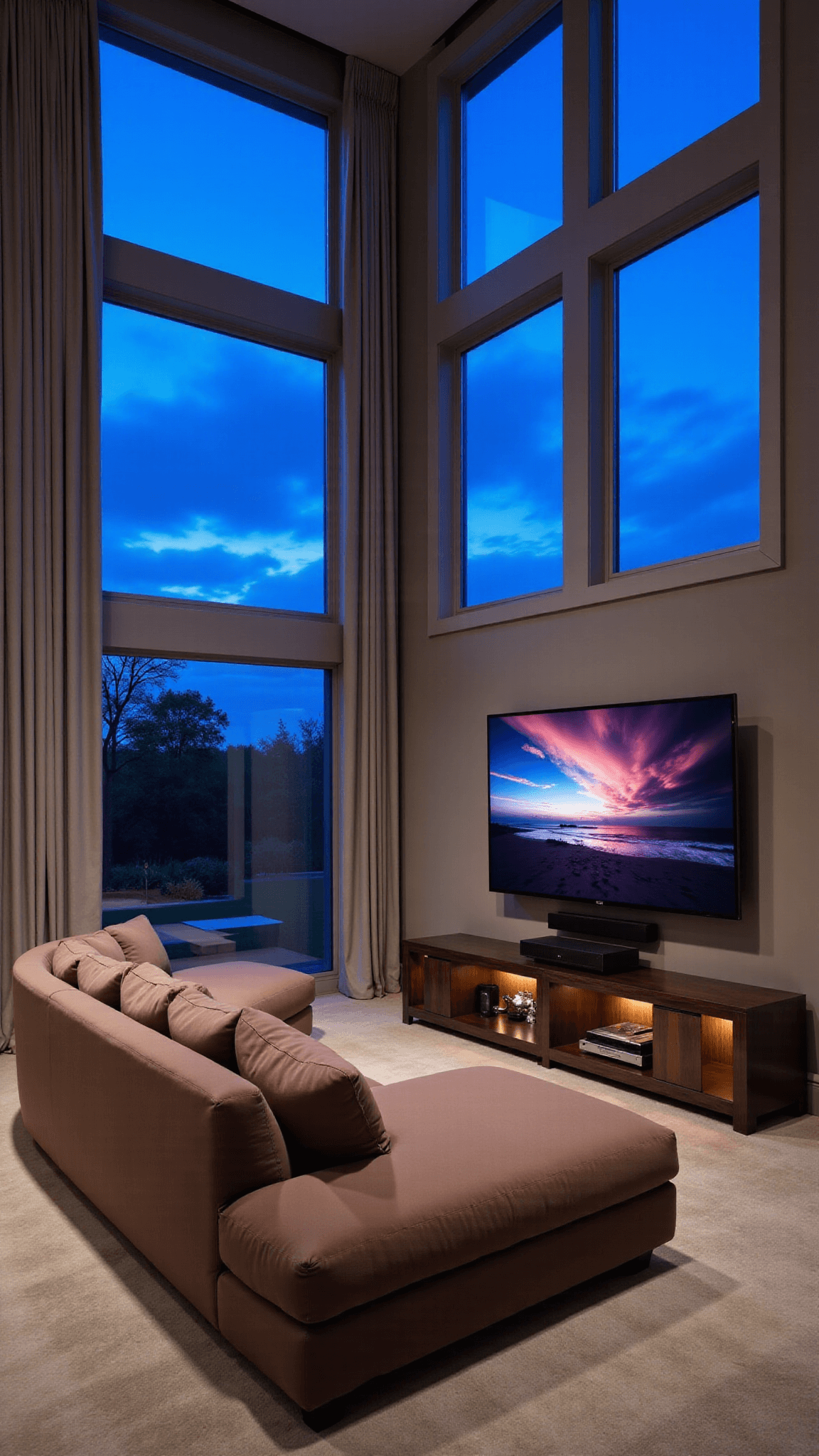
Design Psychology: Making Technology Feel Human
Technology shouldn’t feel cold or impersonal. The goal is creating a space that feels like an extension of you.
Design Philosophy:
- Balance technology with warmth
- Use natural materials alongside tech
- Create intuitive interaction points
- Prioritize comfort and functionality

Pro Tips for Smart Living Room Success
- Start small and scale gradually
- Choose devices with cross-platform compatibility
- Consider your specific lifestyle needs
- Invest in quality over quantity
- Plan for future technology upgrades
Troubleshooting Common Smart Home Challenges
Quick Fixes:
- Weak WiFi? Consider mesh network systems
- Device compatibility issues? Research before purchasing
- Privacy concerns? Use advanced security settings
- Overwhelming tech? Start with 2-3 core devices

Budget Considerations
Investment Tiers:
- Budget ($1,000): Basic smart speaker, smart bulbs
- Mid-Range ($2,500): Voice assistant, smart lighting, basic furniture
- Premium ($5,000): Comprehensive smart home ecosystem
Final Thoughts
Creating a smart living room isn’t about having the most expensive gadgets. It’s about designing a space that understands and enhances your lifestyle.
Remember: Technology should serve you, not the other way around.
Run the cables before the furniture. These pieces make the room calm, not wired.


